Inside Evin: The Missing Envoy and the British Hostages Left Behind
A survivor of Evin Prison shared his story with me.

“Just imagine yourself in a toilet without windows.”
That is how retired British-Iranian engineer Anoosheh Ashoori describes the cell he was held in inside Iran’s Evin Prison.
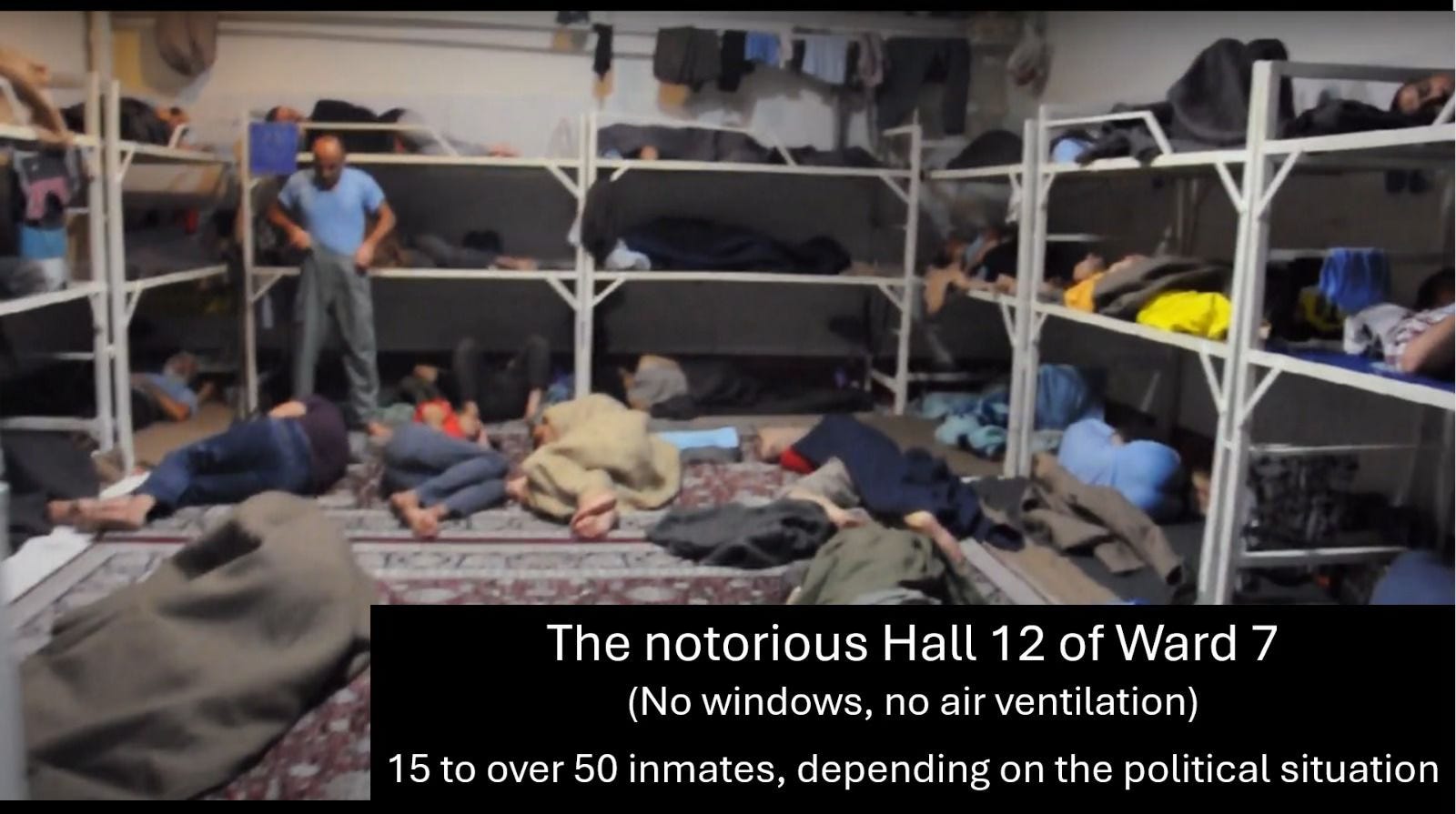
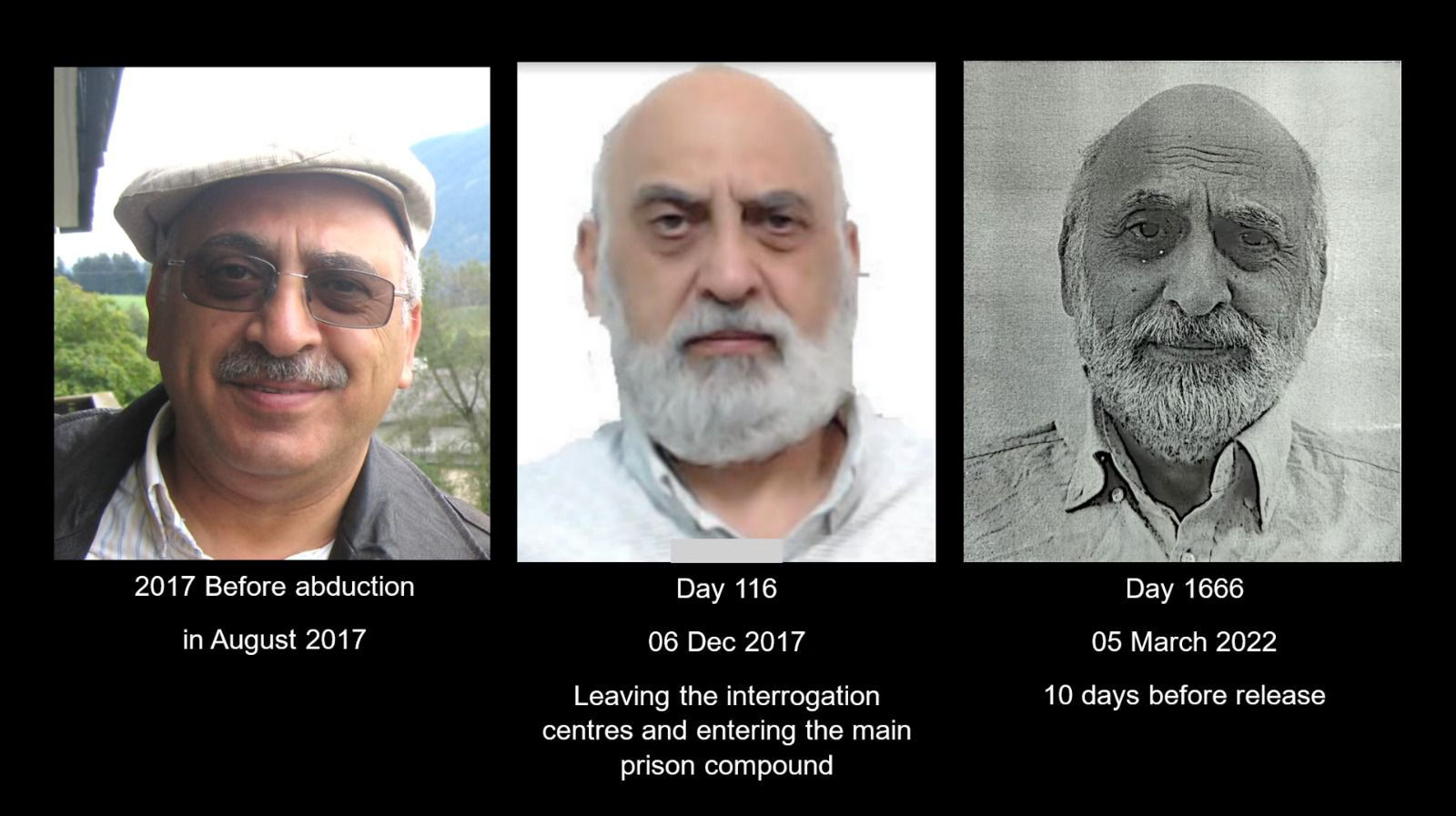
These photos, shared with me by retired British Iranian engineer Anoosheh Ashoori, show the reality of the nearly five years he spent locked inside Iran’s Evin Prison on baseless spying charges.
“Just imagine yourself in a toilet without windows,” Ashoori describes to me, recounting his arbitrary detention in Evin Prison. “The sounds of crying and whimpering. All the neighbouring cells were in the same position as I was.”
At one point, he says, the pressure became so intense that he stopped thinking of himself as a person at all. Only as someone trying to survive without putting his family at risk. He recalls being threatened with harm to those he loved and says that he reached the point where he felt he should not exist if it meant protecting them.
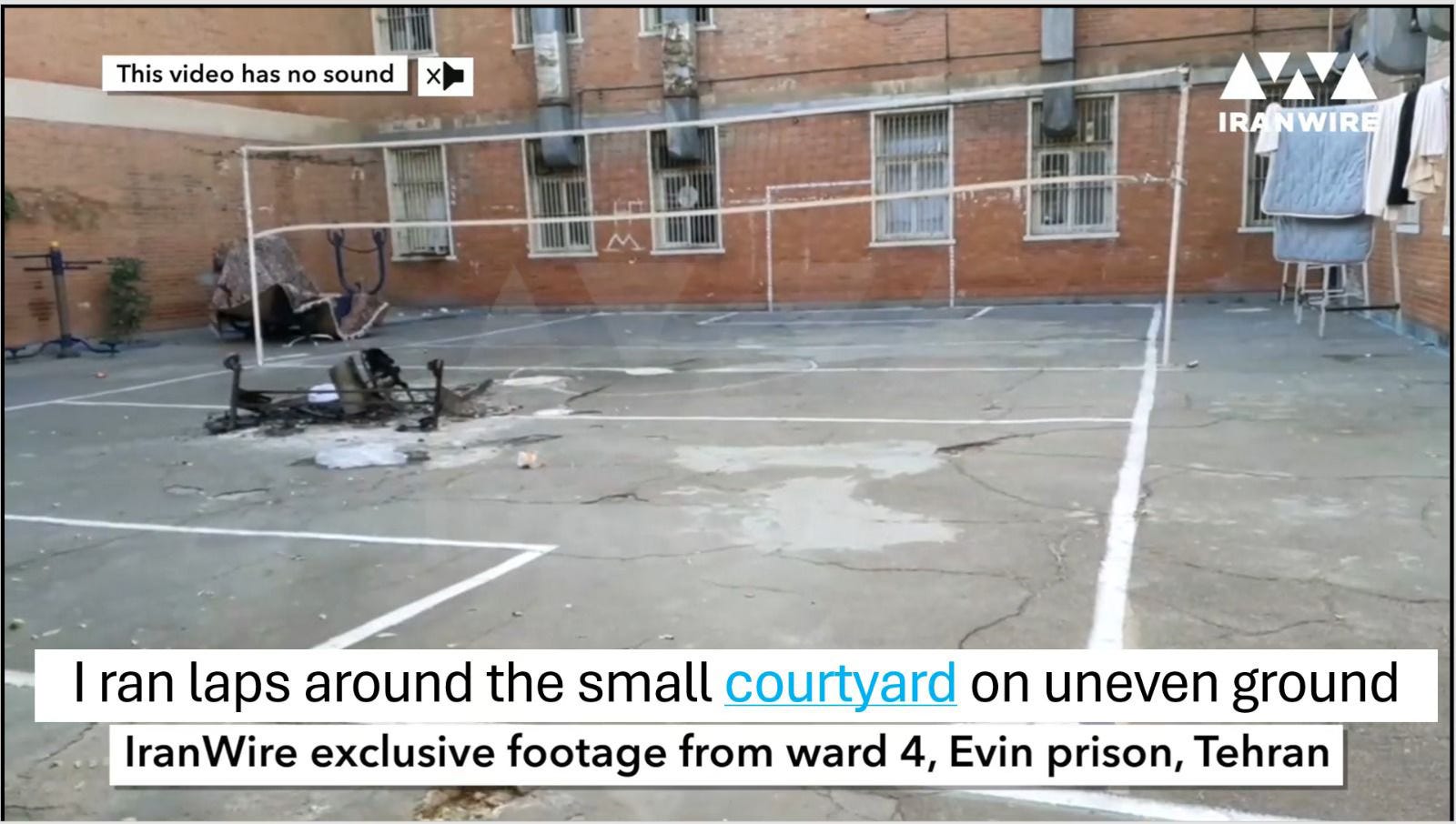
Ashoori was taken off the streets of Tehran in 2017. He is one of the lucky ones who made it back to London in March 2022 after the UK government settled a £400 million debt owed to Iran. However, his freedom came after years of what he describes as a deeply flawed strategy by the UK Foreign Office. A strategy of “quiet diplomacy” that he argues tried to silence his family’s fight for his life.
“The Foreign Ministry was telling my family to be quiet, we are doing something,” Ashoori recalls.
Today, that same diplomatic debate is raging again, because while Ashoori is free, others are still trapped inside those windowless cells.
Those Left Behind
Mehran Raoof, a British-Iranian labour rights activist in his late 70s, has been detained in Iran since October 2020. Earlier, this year, British citizens Craig and Lindsay Foreman were also handed ten-year sentences on espionage charges. These are accusations the UK denies.
With geopolitical tensions in the Middle East at boiling point, campaigners are terrified that dual nationals will be used as diplomatic pawns or human shields.
Fariborz Pooya, an activist fighting for the release of prisoners like Raoof, is stark in his assessment. “A lot of prisoners are at huge risk,” Pooya warns. “Political prisoners are just used as diplomacy but they should not be part of the solution for bigger geopolitical issues.”
Pooya and other activists are demanding a shift away from traditional back-channel talks. They argue that families “should not just rely on the government, because they only take action if we maintain that pressure.”
The Official Stance
The UK government maintains that its approach is designed to ensure the safety of detainees without escalating volatile situations.
In a statement provided to me by the Foreign, Commonwealth & Development Office (FCDO) they defended their handling of cases like that of Raoof’s:
“FCDO officials stand to provide consular assistance to the family of Mr Mehran Raoof, who has been detained in Iran since October 2020, when requested. The FCDO has long advised against travel to Iran for British and British Iranian nationals, who are at significant risk of detention.”
The Unfulfilled Promise
Before taking power, the Labour Party campaigned on a promise that offered hope to hostage families: the appointment of a Special Envoy for arbitrarily detained nationals. Modelled on similar roles in the US, this Envoy would coordinate complex hostage crosses and act as a dedicated champion for families.
Over a year into the new government, the seat remains empty.
“I want to say to any Labour government who promised that we will have a special envoy…maintain that pressure,” says Pooya.
I took these frustrations to Labour MP, Janet Daby, who was a highly visible campaigner for Ashoori’s release. I asked her why the government has delayed the policy of this Envoy.
Daby insists the plan has not been abandoned. “There is still a commitment for this post.”
But Daby went further, offering a significant revelation about the future of the role. Acknowledging that her time campaigning for Ashoori gave her a unique approach to handling these highly sensitive and deeply personal cases, Daby told me that if asked she would be open to stepping into the Envoy role herself.
“It is something I would consider and think about seriously.”
“Why are you so inactive"?”
Whether Daby officially takes the Envoy chair or passes it to someone else, survivors say time is a luxury the government does not have. Everyday of bureaucratic delay is another night a British citizen spends sleeping in Evin Prison.
Ashoori, whose trauma is now channelled into advocacy for those left behind, has a direct challenge for the politicians in Westminster.
“If you can bear only one night in Evin Prison, then don’t do anything. But if you can’t then why are you so inactive?”
For Mehran Raoof, Craig Foreman and Lindsay Foreman, the answer to that question could mean the difference between coming home and disappearing entirely.
For more on this story listen to the radio package I produced.